Pitru Paksha 2026 will be observed from 26 September to 10 October, with Sarva Pitru Amavasya on 10 October. This sacred period is dedicated to remembering our ancestors through Shradh (श्राद्ध), tarpan, pind daan, ann daan and prayers in Hindu culture. But behind these rituals are stories that explain why पितृ पक्ष holds such a deep place in religious festivals of India.
Table of Contents
Pitru Paksha 2026: 4 Powerful Stories Behind पितृ पक्ष and Shradh
Here are four fascinating stories associated with Pitru Paksha that every family should know.
Story 1: Why Gaya Ji in Bihar Hold special place for Pind Daan during Pirtru Paksha?
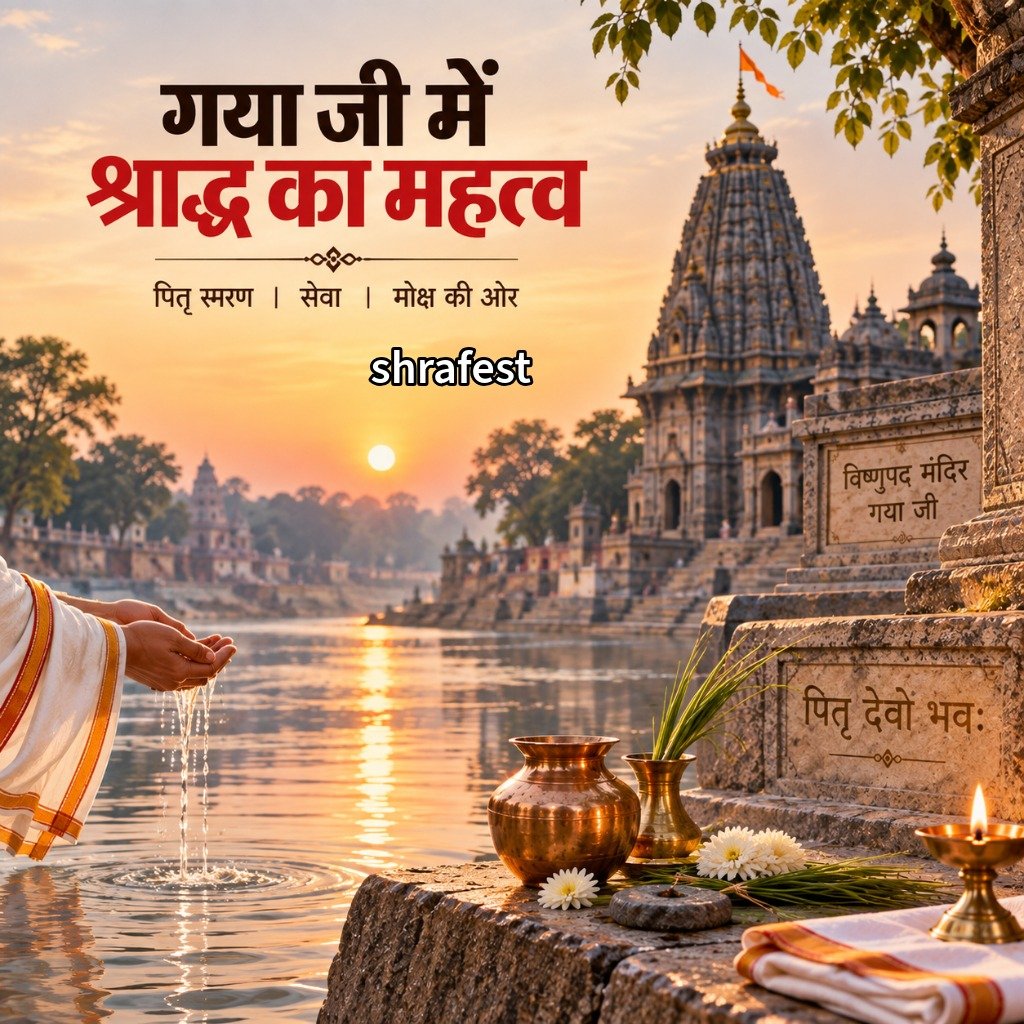
The story of Gaya Ji goes back to Gayasura, a powerful devotee of Lord Vishnu. His intense penance made his body powerful that anyone who came into contact with him was believed to attain liberation.
The gods became concerned that the balance between earthly life and the afterlife was being disturbed. They approached Gayasura and requested his body as the site for a great yajna.
Gayasura agreed and lay down across the land. When his body continued to move, Lord Vishnu placed His foot upon a sacred stone to hold him steady. This divine footprint is associated with the Vishnupad Temple in Gaya.
Lord Vishnu granted him a boon to Gayasur, seeing his devotion, making Gaya a sacred place where people could perform Shradh and pind daan for their ancestors, and they get Moksh.
That is why Gaya Ji continues to hold a special place in Pitru Paksha 2026, not less than performing puja near Ganga River.
Story 2: Curse in Treta Yug by Maa Sita: Pitru Paksha Katha
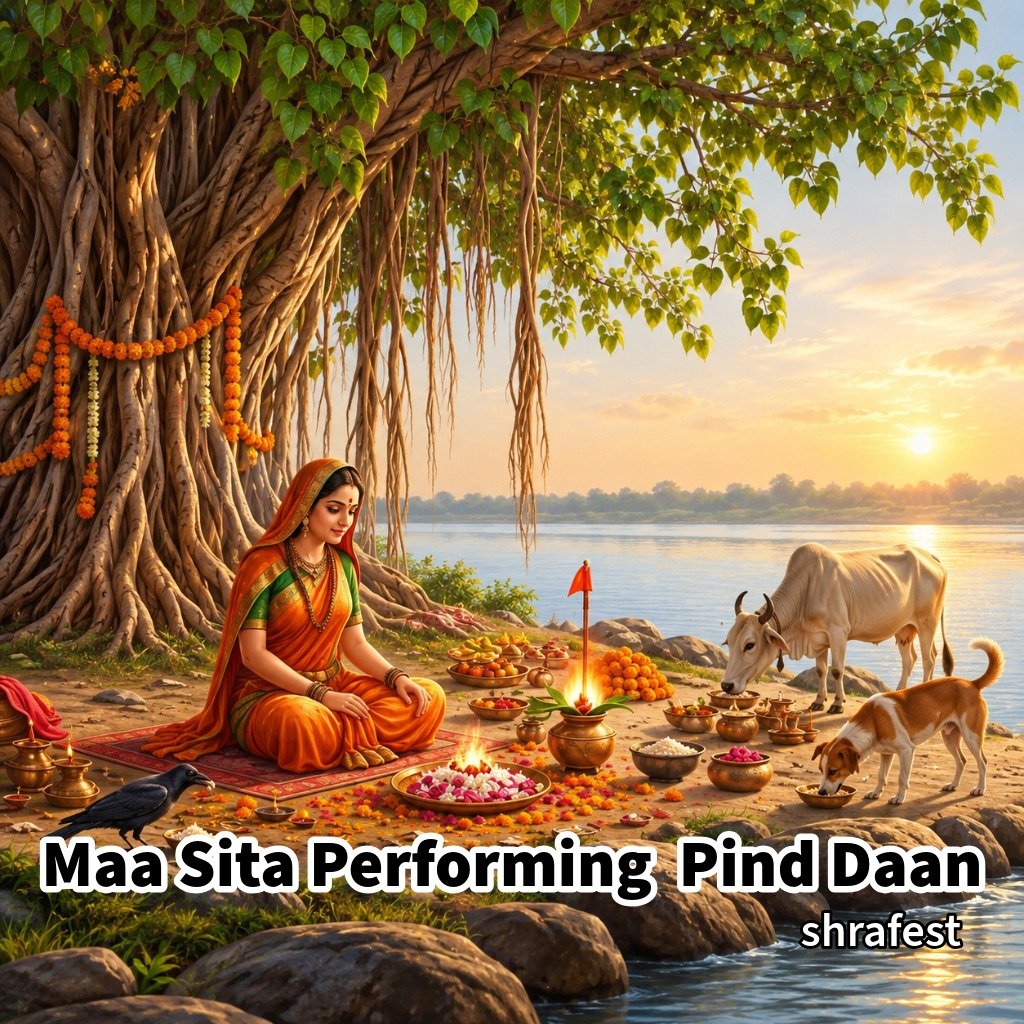
One of the stories connected with पितृ पक्ष takes us back to the Treta Yug, when Lord Ram, Maa Sita and Lakshman visited Gaya to perform pind daan for King Dasharatha.
While Ram and Lakshman went to arrange the required materials, Sita remained near the Falgu River. As puja time was about to get over, Dasharatha appeared before her in the form of a spirit and asked her to perform his pind daan.
With no ritual materials available, Sita made pind from the sand of the Falgu River and performed the ritual with complete devotion. She called the Phalgu River, a cow, a crow, a Brahmin, Tulsi and the Banyan tree as witnesses.
When Ram returned, he was surprised to hear that the ritual had already been completed. However, when the witnesses were asked, they did not support Maa Sita. Only the Banyan tree stood by her and spoke the truth.
Sita became upset and cursed the witnesses while blessing the Banyan tree with lasting spiritual significance.
- Phalgu River: Cursed to lose surface water and flow only underground.
- Cow: Though 33 Koti devi devta stays inside her as per hindu beliefs, but her mouth would be considered impure.
- Crow: Cursed to suffer from hunger and never die natural death, but a sudden or painful death.
- Brahmin: Cursed to remain unsatisfied with their wealth or earnings, and will greed for more and more during these 16 days,
- Tulsi: Being trusted to purify everything, was cursed never to use in funeral or shradh offerings.
Banaya Tree (Akshyavat)- The Boon receiver: Because it spoke truth, therefore it was blessed to be eternal, long-lived, full of shades, Saubhagya dene wala, and stays foreever green ka vardan diya tha.
Story 3: Karan: Returned to Earth after his Death Katha
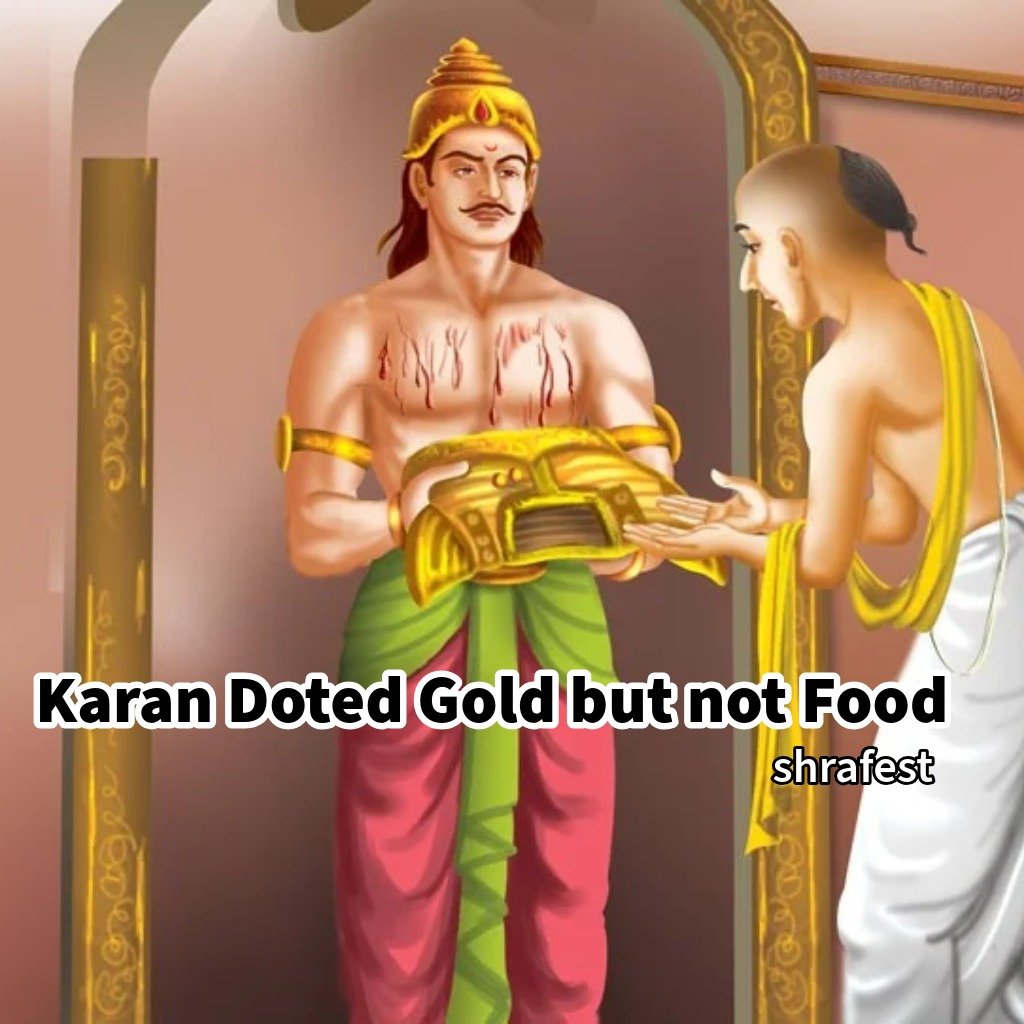
The story of Karna is perhaps the most famous Pitru Paksha Katha.
Karna was known as one of the greatest donors of the Mahabharata. He gave away gold, jewellery and wealth throughout his life, therefore we also call him दानवीर.
After his death, when he reached the heavenly realm, he was offered gold and precious objects instead of food.
Karna was confused and asked why he was not receiving food. He was told that although he had donated immense wealth, he had never offered food and water to his ancestors.
Karna requested an opportunity to return to Earth, when he relised his mistake. He was allowed to come back for a limited period and perform Shradh, tarpan and food donations for his ancestors.
यही कारण है कि पितृ पक्ष में अन्नदान और तर्पण को विशेष महत्व दिया जाता है।
Story 4: Yudhishthira, Bhishma, Shradh (श्राद्ध), and Pind Daan
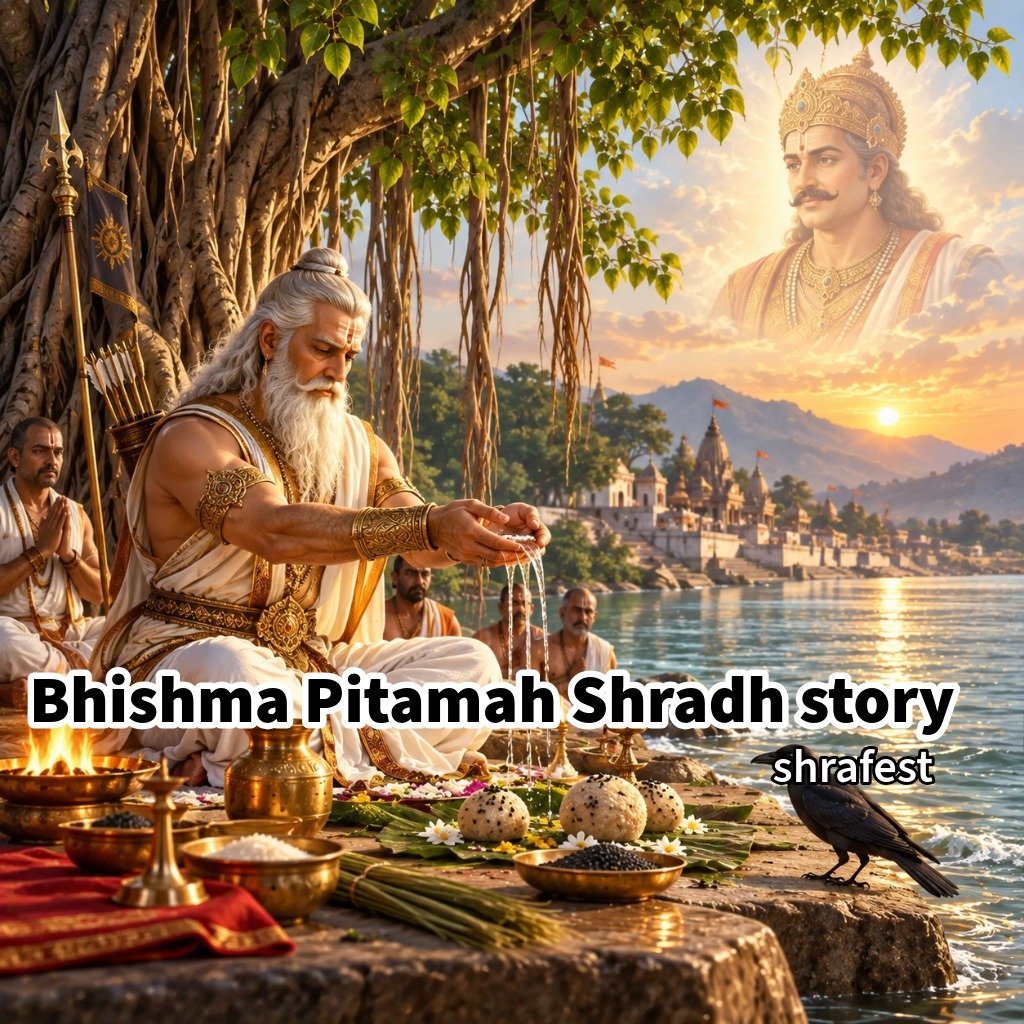
The next story comes from the Mahabharata, where Yudhishthira asks Bhishma Pitamah about the importance of Shradh and the correct way to honour ancestors. Bhishma then recalls an extraordinary incident from his own life
After his father, King Shantanu, passed away, Bhishma went to Gangadwar to perform his Shradh.
While offering the pind, he suddenly saw a beautifully adorned hand emerging from the earth, apparently asking him to place the pind directly into it. Bhishma recognized the hand as belonging to his father.
For a moment, he was emotionally shaken. But instead of acting purely on emotion, Bhishma followed the prescribed Shradh procedure and placed the pind on kusha grass, as the ritual required. His decision was accepted, and Shantanu appeared and blessed him for following dharma correctly.
The Deeper Meaning of Pitru Paksha पितृ पक्ष
Pitru Paksha 2026 gives families an opportunity to remember their पितर and acknowledge the values, blessings and sacrifices passed down through generations. Whether a family performs pind daan, tarpan, Shradh or ann daan, the most important element is the भावना behind the ritual.
These ancient stories also remind us that our connection with our ancestors does not end with their physical departure. Their memories, teachings and संस्कार continue through us. That is why पितृ पक्ष remains an important part of Hindu tradition even today.
As we observe Shradh (श्राद्ध), the essence is simple: remember with श्रद्धा, give with humility and keep the memory of our ancestors alive.
Frequently Asked Questions related to Pitru Paksha
-
What is pind daan?
Pind daan is an important ancestral ritual in which symbolic offerings are offered, and performed with prayers for their well-being and peach of the पितर.
-
How does Pitru Paksha connected us from roots to rituals?
Pitru Paksha is a journey from roots to rituals reminding us about family traditions, perform tarpan and pind daan and learn about their ancestors.
-
Is a skincare routine connected to Pitru Paksha?
Maintaining personal cleanliness, following simple and respectful daily skincare routine can be part of preparing for future coming festivals, but follow all rules and regulations related to Pitru Paksha.
-
What can be a financial knowledge related to पितृ पक्ष?
Though there is no direct financial knowledge related to पितृ पक्ष, it can remind us to be mindful of our spending while performing Shradh, puja and daan. Families can choose rituals and charitable offerings according to their financial capacity, rather than feeling pressured to spend beyond their means.