
If you have grown up in a North India household, you probably remember the excitement of Kanya pujan, living traditons of the world, where nine forms of goddess are prayed in form of 7/9/11 Kanya. Its not only rituals for families, but memory for every girl where Navratri is celebrated twice a year in form of Chaitra and Shardiya.
Shardiya Navratri is one of the most cherished religious festivals of India, where one side goes with fasting, one side playing dandiya or garba, one side welcoming durga maa in house as mayaka etc., collectively making, celebrating and representing the power of Shakti.
Table of Contents
Shardiya Navratri: Why it being Different from Chaitra Navratri?
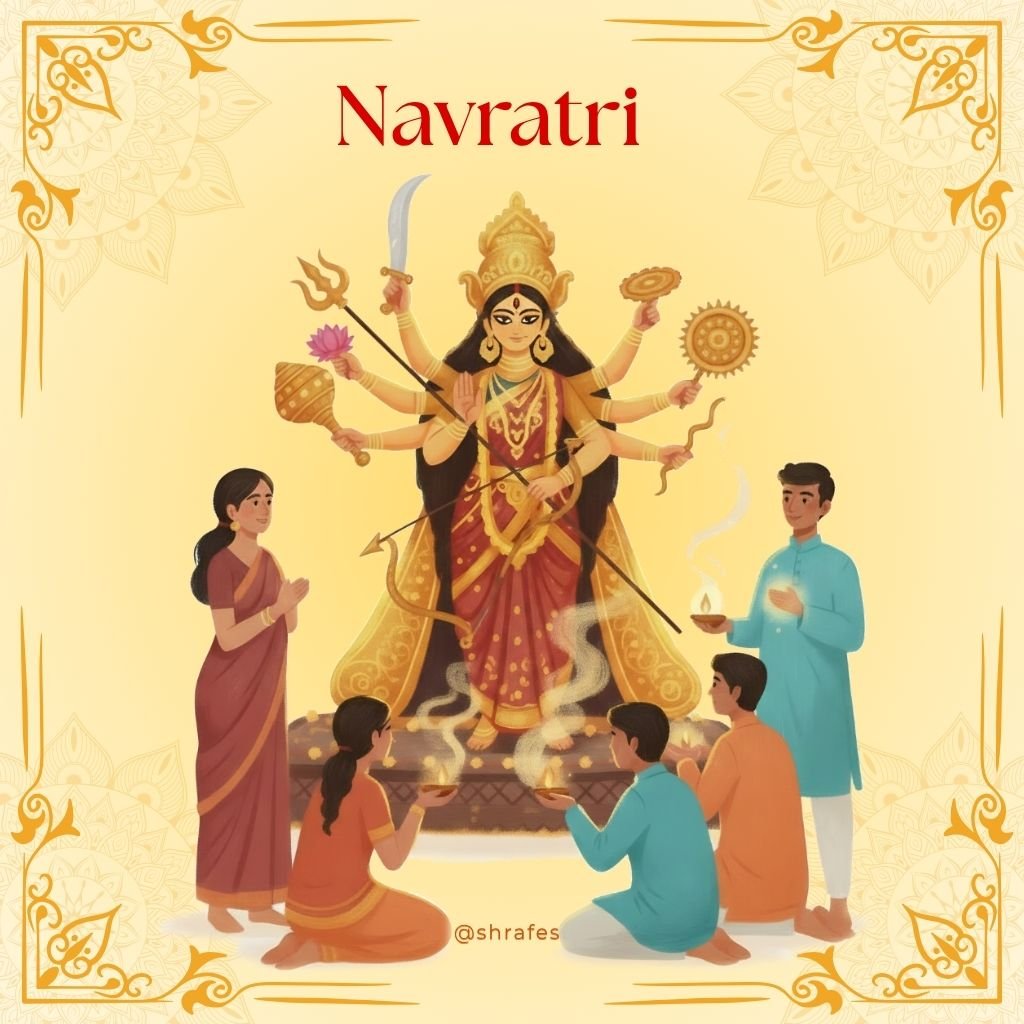
The 9 days of Goddess Durga are associated with the worship of her nine manifestations, commonly known as Nav Durga. The nine forms of goddess represent different qualities of divine feminine energy from courage and penance to wisdom, compassion and spiritual fulfilment.
This year, Shardiya Navratri will begin on 11th October 2026, ending on 19th October 2026 with celebrating Vijayadashami on 20th October 2026.
Chaitra Navratri initiated growths, Sharad Navratri represents the phase of visible outcomes and consolidates with ending, making the transition from monsoon to winter.
The Chaitra Navratri represent quiet lifestyle while Sharad Navratri represent the participating life fully with joy and discipline.
Chaitra Navratri is focused on awakening inner power while Sharad Navratri is focused on courage and wisdom.
Stories Behind Sharad Navratri: Victory Over Excess
Story 1: Legendary Battle Between Maa Durga and Mahishasur
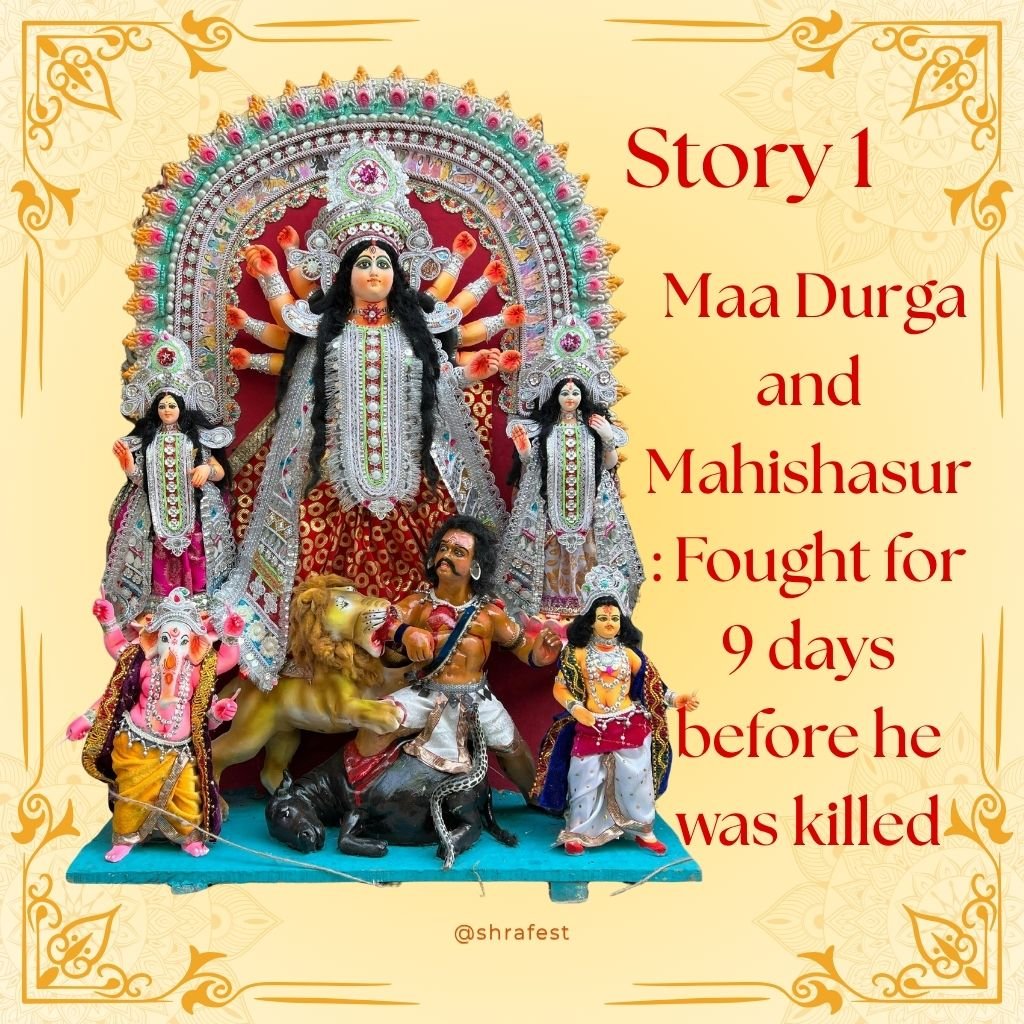
Mahishasur gained a powerful boon from Lord Brahma stating no man or God can kill him, making him rude, arrogant and disrupting everything. All prayed to Shakti, making it Maa Durga to fight against him. 9 different forms of Goddess Durga fought the battle against his army from raktbeech to Mahishasur.
Realizing power of Maa Durga and all 9 forms, he tried to confuse her by using his various forms such as buffalo, elephant, human, lion etc.
On the 9th day and final day, Goddess Durga pined him down when he was in buffalo form using her trishul, marking the victory over evil, earning the title of Mahishaurmardini (destroyer of Mahishasura).
The story is a reminder that when शक्ति comes together, even the biggest evil can be defeated.
Story 2: The Story of Lord Ram and Ravan
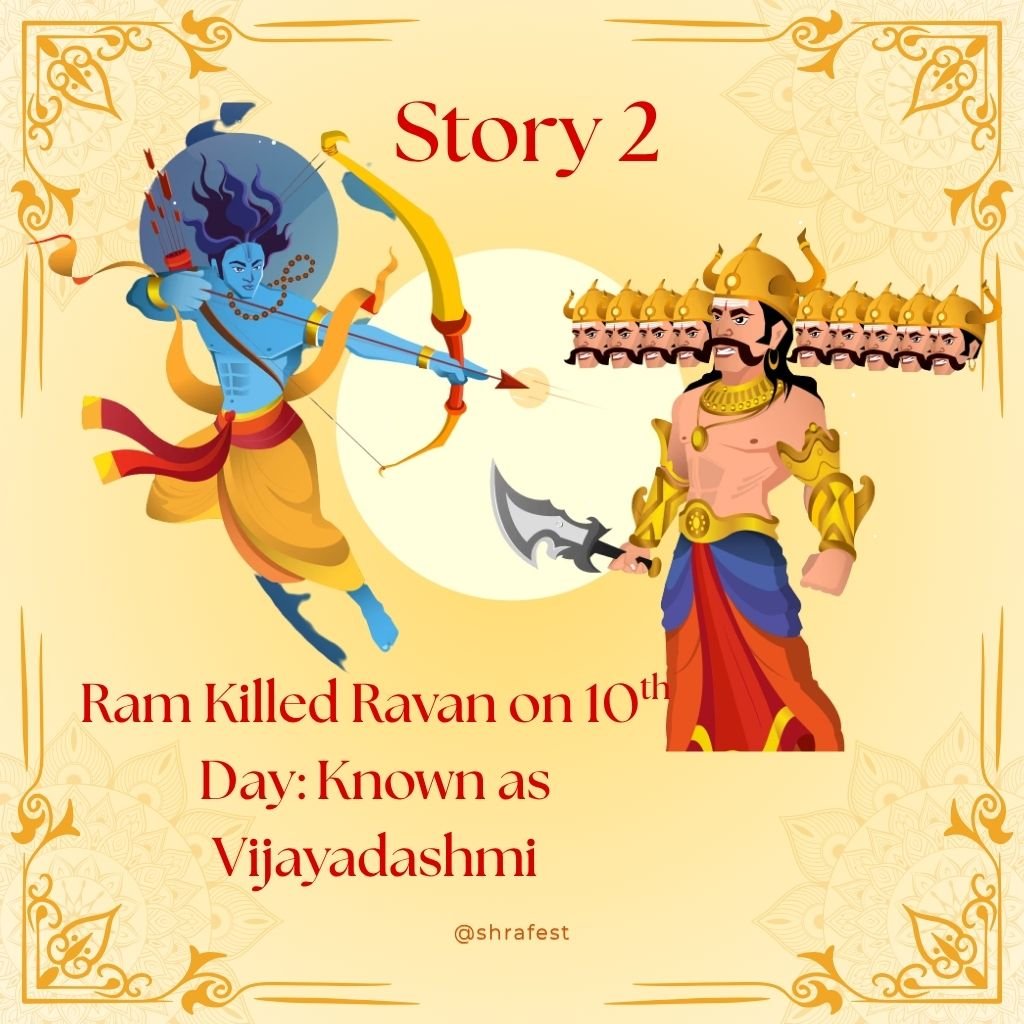
We all know, that Ravan kidnapped Maa Sita, and Ram went to save her. Lord Ram and his army fought battle with army of Ravan, but as soon as final battle came, Lord Ram realized that his inner courage is not alone enough, so he prayed to Maa Durga for 9 days with complete devotion, seeking her blessing for victory as she did. After nine days of prayer, he defeated Ravan on the 10th day, making the day as Vijaydashmi or Dussehra.
The story represents dharma win over adharma.
Nav Kanya Pujan: Why Do we Worship Nine Girls and 1 Langur?
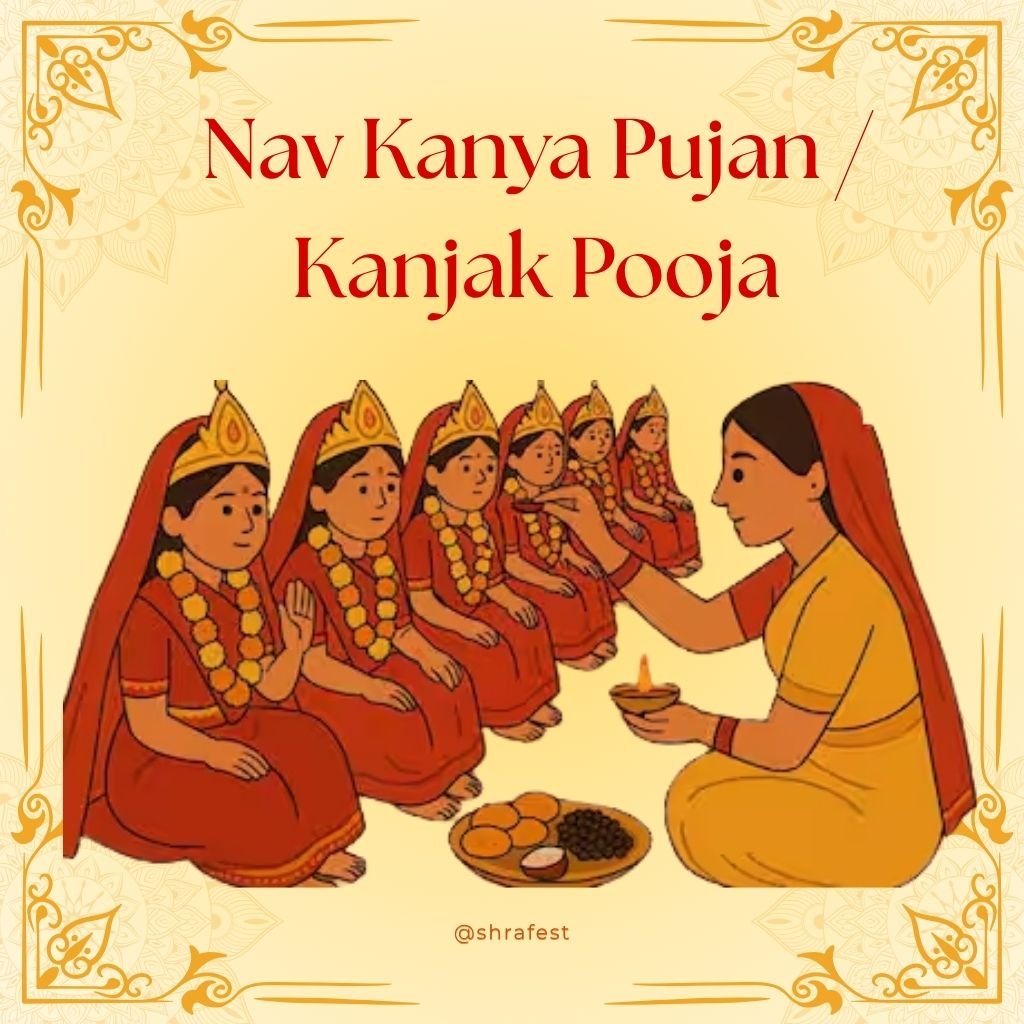
On the 8th and 9th Day of Navratri (Ashtami and Navami), families perform Nav Kanya Pujan, also known as Kanjak puja, or kanya puja, or kanjak jimna, where 7/9/11 young girls are welcomed with 1 or 2 langurs, as they represent Bhairav or Hunuman, the protector who guards Goddess and her devotees.
“या देवी सर्वभूतेषु मातृरूपेण संस्थिता।
नमस्तस्यै नमस्तस्यै नमस्तस्यै नमो नमः॥”
Meaning: I bow again and again to the Goddess who resides in all living beings in the form of the girls.
हर कन्या में देवी का स्वरूप देखना और उसका सम्मान करना।
Significance of Kanya Pujan
Kanya Pujan is rooted in the belief that every girl carries the divine energy of Shakti. Worshipping Kanyas during Navratri symbolises respect for the feminine, purity and the blessings of Maa Durga. It is also a way of acknowledging the Goddess in a living form rather than only through an idol or temple ritual.
- Honours Shakti: Kanyas are seen as manifestations of the Goddess.
- Represents purity: Their innocence symbolizes purity and new beginnings.
- Seeks blessings: Families pray for happiness, prosperity and wellbeing.
- Celebrates feminine power: The ritual reinforces respect for girls and women.
- Connects with Navdurga: The Kanyas symbolically represent the divine feminine forms worshipped during Navratri.
What Is Offered During Kanjak Puja?
One thing worth remembering is that kanjak Puja does not have to become an expensive affair. A little festival budget planning can help you prepare everything without eating into the rest of your festival spending money.
After all, the value of the ritual lies in भावना, not in the price tag.
1. Halwa, Puri and Black Chana
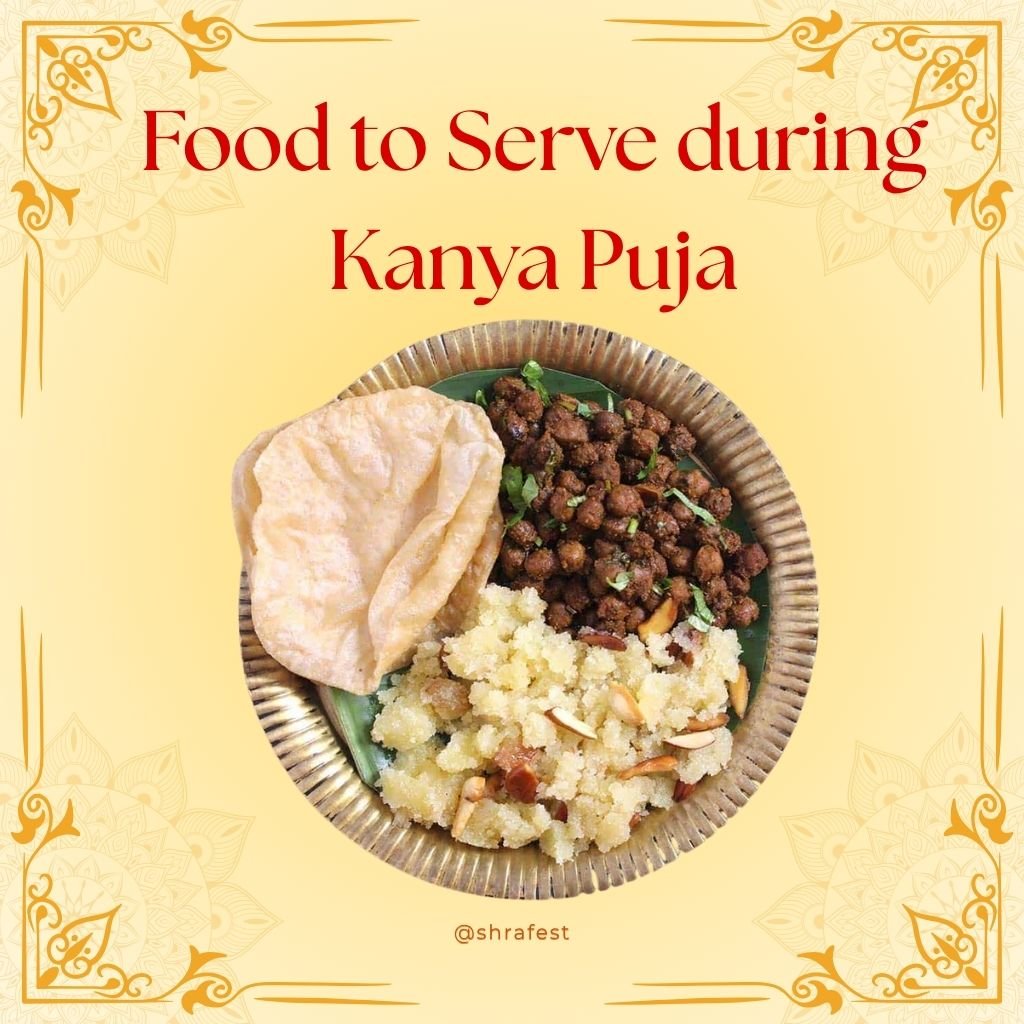
Ask anyone what they remember about Kanjak, and chances are they will mention halwa-puri!
Suji halwa, fluffy puris and spicy black chana form the classic plate served to the Kanyas. Many families also add bananas, seasonal fruit or a small sweet.
और सच कहें तो बच्चों के लिए भी यही सबसे exciting हिस्सा होता है—पूजा के बाद गरमा-गरम खाना!
2. Coconut, Shrifal or a Sweet
Coconut, or shrifal, is considered an auspicious offering in many Hindu rituals. It can be given along with a small sweet or fruit.
You can keep this part as simple as your family tradition allows. There is no need to create an elaborate thali if that is not customary in your home.
3. Gifts: Small, Useful and Thoughtful
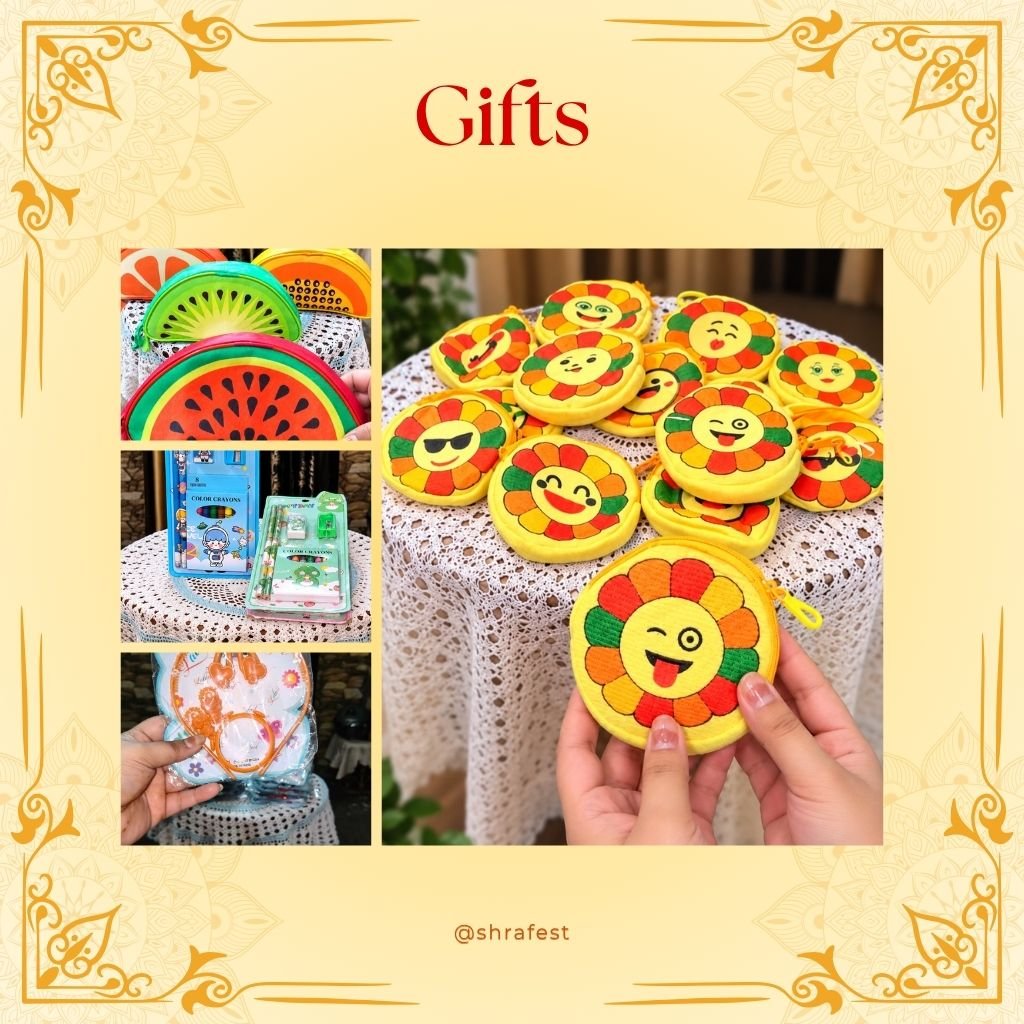
The gift does not have to be expensive. In fact, small things often bring the biggest smiles.
You can consider Smily coin pouches, stationery, cute gift hampers, hair accessories, colouring supplies, books, small toys and other useful items.
If you are looking for more options, visit the link added to explore different gift ideas and pick something according to the children’s age and your budget.
- Amazon Store link: Visit Now
- Instagram Gift Links: Pencil Pouch, Stationary, Hair accessories, Coin Pouch and many more.
- Meesho Finds: Visit Here
The same practical approach works here as it does when creating a skincare and hair care routine choose something useful rather than simply choosing something expensive.
4. Dakshina—As Your Pocket Allows
There is no need to compare your dakshina with someone else’s.
Whether it is ₹11, ₹21, ₹51, ₹101 or an amount your family is comfortable with, give it happily.
Kanya Pujan Is More Than a Ritual
Maybe that is what makes Kanya Pujan so special. For one family, it is the morning of making halwa and puris. For another, it is remembering how their grandmother used to wash the little girls’ feet before serving them food. And for every girl who has sat in that Kanjak line, it can simply be a childhood memory—माथे पर रोली, हाथ में प्रसाद और जाते समय मिलने वाला छोटा-सा gift.
The 9 days of Goddess Durga may end with Ashtami or Navami rituals and finally Vijayadashami, but the message of Shakti doesn’t end there.
The stories of Maa Durga and Mahishasura remind us that शक्ति becomes stronger when it comes together. The story of Ram and Ravan reminds us that even when we think we are ready for a battle, seeking strength and guidance is not weakness.
And Kanya Pujan brings both these ideas into our homes.
The nine forms of goddess are not just names we remember during Navratri. They represent qualities we continue to need in everyday life—courage, patience, wisdom, faith and strength.
So, whether you invite seven, nine or eleven Kanyas, serve a simple plate of halwa-puri-chana, offer a coconut, give a small Smily coin pouch or simply give dakshina according to your means, the essence remains the same.
कन्या पूजन का मतलब सिर्फ कन्याओं को भोजन कराना नहीं, बल्कि कन्या में शक्ति को देखना और उसका सम्मान करना है।
And perhaps that is why navratri continues to feel less like a festival we simply celebrate and more like a tradition we inherit, experience and pass on.
Frequently Asked Questions about Navratri
-
How many Kanya should I invite for Kanya Puja?
The number can be 7/9/11 as per availability of Kanya in your area. Traditionally 9 Kanyas and 1 langur is worshiped as they represent 9 forms of Maa Durga.
-
What gifts can be given during kanjak puja?
The gifts do not need to be expensive, but can be useful. For reference you can visit this link of amazon: Navratri Gift ideas.
-
Do we need to keep fast as compulsion during Navratri?
Fasting is not mandatory during any Navratri, one must be aware of its rules and rituals.
-
How many types of Navratri are there?
There are 4 Navratri celebrated namely; Chaitra Navratri, Sharad Navratri and 2 Gupt Navratri fall in month of Ashadh ad Magha as seasonal navratris in India.